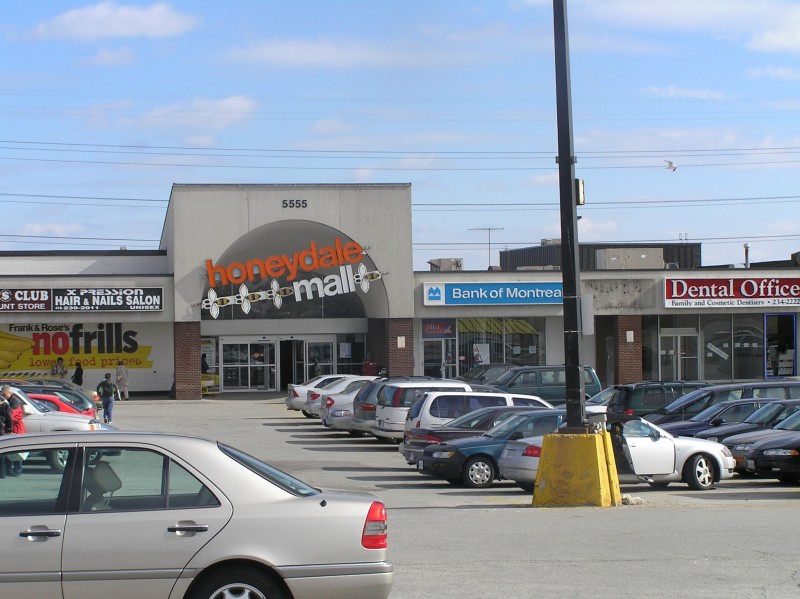
Friends put reviews of malls online - The Columbus Dispatch, Sunday, July 15, 2007
Deadmalls - The Weblog of Deadmalls.com
News and commentary on retail history, dead malls, and a chaotic culture in decline.
Saturday, July 21, 2007
Thursday, June 28, 2007
(from http://www.blogger.com/post-create.g?blogID=12567288)
©2007 Daily Freeman - a Journal Register Property. All Rights reserved.
06/21/2007
Clogged arteries
Ah, summertime.
Long days, barbecues, beaches, hiking in the Catskills and ...
... protracted delays at New York airports and on the New York State Thruway.
... sitting in traffic on a city of Kingston street.
... fighting one's way through traffic at the local malls.
... rising gasoline prices to pay for your shiftless idling.
The Mid-Hudson Valley suffers transportation delays at many different levels.
On the micro level, you can see it and feel it at intersections, on stretches of highways, at clogged commercial areas.
In Kingston, transiting Washington Avenue from Exit 19 to state Route 32 south can be an excruciatingly halting affair.
Traffic funneled into two lanes for most of the route, must negotiate seven unsynchronized traffic signals and two mandatory stops over 1.6 miles.
In the town of Ulster, the county's retailing axis funnels traffic through a hodgepodge of development, an overabundance of ill-considered curbcuts and cars attempting to turn left across two lanes of heavy, oncoming traffic.
On the macro level, our dependence on the Thruway and metropolitan airports is obvious.
The backups on the Thruway on summer weekends are enough to make you plan your schedule around them. Voters may ask how the Thruway Authority allowed things to get that bad and whether there are any plans whatsoever to deal with the nearly chronic delays.
The metropolitan airports have more delays and cancellations - 38 percent of all scheduled flights in the first four months of this year - than any other in the nation. Voters may ask how the Port Authority of New York and New Jersey allowed things to get that bad and what, if anything, it plans to do about it.
The ability to move people, goods and services is indispensable and requires constant attention.
As the speed of transportation increases and costs drop, societies thrive.
When movement becomes slower and more expensive, there are huge societal costs, in part because time is money.
And it is so much more.
Sitting in traffic can suck the joy out of the most beautiful day, the most carefree errand.
So ease of movement is not just about money. It's also about the quality of life for us and for those we would attract to the Mid-Hudson Valley to bring new ideas, energy and capital.
The summer driving season, with increased traffic and necessary road construction delays, only makes an ongoing trend obvious. From year to year, our transportation arteries are hardening.
In a globalizing world in which the search for the frictionless movement of goods and services is an irresistible imperative, the Mid-Hudson Valley seems sometimes to be stuck in a 1950s time warp.
On the micro level, we are drowning in local decision-making that views every problem of well-being at the cellular state rather than that of the entire organism. Stop signs, traffic signals, curb cuts, unrestrained retailing and residential sprawl. More traffic, slower traffic. It's a transportation death by a thousand cuts.
On the macro level, the Port Authority of New York and New Jersey and the New York State Thruway Authority seem paralyzed to adequately manage their (our) affairs.
As Pattern for Progress noted in a study a few years ago, the Mid-Hudson Valley can be properly viewed today only as a part of perhaps the most dynamic supermetropolitan area on the planet. We constitute an indispensable leg of the "New Atlantic Triangle," with its points at Boston, New York City and Albany - that is an entry corridor to both Canada and the West.
If that corridor - and our local streets - are increasingly clogged, what should be an advantage for our future will be squandered.
=-=-=-=-=-=-=-=-=-=-=-=-=-=-=-=-=-=-=-=-=-=-=-=-=-=-=-=-=-=-=-=-=-=-=-=-=-=
Reader Comments
Added: Thursday June 28, 2007 at 11:27 PM EST
Jobs. Safety. Efficiency. Here?
The grim truth of the matter is that eastern New York State lags behind the rest of the nation in keeping our transportation infrastructure ahead of demand.
While other states' road organizations actually plan ahead, add lanes to their intercity connecting interstates and actively build redundancy into their highway systems, so if one highway closes, there is plenty of backup to pick up the slack; New York sits dormant with no new highways, no new lanes, but plenty of increased traffic headaches.
So what does New York do about it? Slowly improving existing roads without addressing capacity, or building roundabouts into existing intersections to solve traffic problems, of course which does nothing to address the bigger problem. It slows down traffic and band-aid's the problem by spreading it out to other intersections. New York is ignoring the fact that there is more traffic and less roadway to carry it.
Think about how hypocritical we are. Our community wants to move in a direction of promoting growth, and creating more local jobs, yet NOT build roads and highways. You simply can't push for development and not address that more cars on the roadways will be one of the results. It's like asking for a rain cloud and not wanting the rain that comes along be with it. Building new highways and roads, contrary to what New York and the Thruway want you to believe, in and of itself will not increase traffic; "More roads creates more traffic" is non-sense. Realistically, "More reasons to drive here, and more people living here" is what creates more traffic - and this is exactly the direction our community is trying to and WANTS to go towards. We're asking ourselves to expand but not giving ourselves a bigger "car"-fishbowl. It makes sense. You wonder why you have to sit on Route 32 or I-87 more and more each day... because that's all we've got... for now.
Building new highways will promote economic growth and attract new retail and business opportunities, promote our areas as efficient and accessible places to live, and remove smog-producing truck and pass-through, non-stop traffic off our surface and residential streets. This would definitely help save gas, and reduce pollution from idling vehicles which therefore beautifies our city, and keeps vital corridors passable in the event of emergency.
Kingston, like many other places in New York, has definitive symptoms that exemplify the problem. But, it is a state problem. The way of thinking about roads has to change at the top level. The fact that New York D.O.T. refused to fund one dime towards the environmental study and construction costs of connector highway NY7/VT-279 that crosses from Bennington, Vermont and runs for four miles within our border should clue you in to the bigger problem. The road is in New York, and New York refused to lift a finger if we had to pay for it.
If only our lawmakers would get it. If you ask New York now why we don't pursue new road projects, the number one reason given is because there is no money or no current need. To get funds to start, change the registration, licensing, and gas tax allocations so the money goes where it was intended. What percentage of money collected for services directly related to vehicles actually go into roads? I don't know the answer, but I'll bet anyone it's less than 10%.
Missouri rewrote its vehicle tax and DMV laws to make sure 100% of monies collected stay within the public works coffer. As a result, the state is rapidly expanding the highway network to four-lane-divided connections between all its cities, without resorting to cost-cutting measures, with ample funds left over to improve the existing infrastructure. Less travel time is an immediate benefit, and less idling means less fuel consumption, which equates to more money saved and less pollution, more intra- and interstate commerce, and less fatalities from head-on collisions. Safety and jobs result. Business move to the state that can move their product. And, all without tolls.
And toll examples, the Ohio turnpike widened from 2 to 3 lanes in each direction 7 years ago between all their major cities, the Maine turnpike did the same from the NH border to Portland 6 years ago, signs on the side of the road proudly boasting "Maine. Thinking Ahead.".
Where is all of the Thruway Authority's money going? Tolls went up, nothing is changing on the road to improve traffic capacity.
A direct quote from a New York State Advisory Panel on Transportation (not affiliated with the Thruway or Department of Transportation) study released in December 2004:
"Current transportation infrastructure, after years of improvement, is starting to deteriorate again and conditions will worsen quickly without significant new investment.
Restoring and maintaining our existing infrastructure is not enough. New infrastructure and system-wide improvements are also needed in order to keep up with increased demands."
We spend tons of money on studies that point out the obvious yet we choose to do nothing about it. Other states figured out the solution and stay ahead of the curve. What will New York do?
Our communities will experience a drastic change because of this whether we do anything about it or not. The question is, will we take control and do anything?
Brian Florence, Glens Falls, NY
Thursday, February 01, 2007
Shoppers turn to town centers
By Jayne O'Donnell, USA TODAY
HINGHAM, Mass. — Carolyn Kennedy wants to add a bocce court to the "lifestyle" shopping center she runs in this Boston suburb. The guys who sit smiling on the benches at the outdoor mall could use something else to do.
It's a problem a lot of malls would like to have. Women outnumber male shoppers by about 2-to-1, and men spend an average of 10 minutes less per mall visit. Because browsers spend 15% more than so-called destination shoppers, stores do everything they can to keep shoppers around.
... very interesting article, click here to read the rest.
Monday, January 22, 2007
Howard Johnson's Restaurants down to three
From Earthtimes.org
Howard Johnson's restaurants down to three
Posted on : 2007-01-22 Author : Business News Editor News Category : Business
WATERBURY, Conn., Jan. 22 (UPI) The owner of ailing Howard Johnson's restaurants plans to revive the chain next year even as it has cut the iconic U.S. chain's size to three restaurants.
The company plans to introduce a new Howard Johnson's ice cream in New York and Puerto Rico in April, then start selling it elsewhere, La Mancha Group in New York, which owns the Howard Johnson's restaurant and food brand, told The Republican-American of Waterbury, Conn.
Once the ice cream is established, the company will open restaurants again, probably in mid-2008, La Mancha President David Kushner said.
La Mancha, which bought the brand from the Wyndham Hotel Group last year, told the Waterbury HoJo restaurant owners to stop using the brand within 30 days after franchise-renewal talks failed, Kushner told the Republican-American.
[The owners of the last Howard Johnson's restaurant in Connecticut plan to remain open under another name and say it was their decision to end their affiliation with the brand, not the company's. (from another uncredited article)]
This leaves three HoJo restaurants -- in Bangor, Maine; and Lake Placid and Lake George, N.Y.
Howard Johnson motor lodges and hotels are separate from the restaurants.
Howard Johnson's was founded in 1925 and grew to more than 1,000 restaurants by the late 1970s.
Copyright 2007 by United Press International
The Connecticut building is an original Nims-style restaurant, and despite garnishing the name, will always be a Howard Johnson's. :-)
Wednesday, October 12, 2005
A Day Off From Work
Hello deadmalls.com fans.
I had today off from work. I didn't get out to any malls or retail sites today, but that's not a bad thing. I sat home and chilled out. Was going through all the great submissions we've been receiving and wanted to let everyone know that all entries are reviewed and we do occasionally go back into the archives to post material. If you've submitted something in the past and haven't noticed it on the site, send an email with PRIOR SUBMISSION as the subject.
We appreciate all the great information, and look forward to continuing to add more sites as time allows.
More updates will appear tonight.
Thanks everyone!
Sincerely,
Brian Florence
Sunday, September 25, 2005
2nd Visit to Waterbury, CT Hojos
Jack Thomas and his dad Mike, my girlfriend Mary, and me took a trip over to Waterbury on Saturday. Rumors of sale had surfaced, and I wanted to make sure I got back there if indeed they were true. Per online reports, it is not, but the plan had already been set.
Arrived about 6:00pm just in time to get pics in the daylight. This restaurant, since Springfield, VT's closure, has the most original looking exterior out of the 5 remaining restaurants. It features a Nims' shape with orange roof and original light-up hollow coppula, and the Hojos 70's brown environmental exterior. The inside of the restaurant retains it's original shape and layout, however an extensive remodeling has changed the furniture and booth cushions and tops, as well as the dairy bar seats.
The food was alright. Chicken really tender, but not great tasting. The macaroni taste was close to original. You could tell it wasn't but they tried; a little too creamy though. Our surprise was the ice cream, though, which thanks to the nice waiter helping us out at the counter, revealed original Hojos 3 gallon tubs! Not all flavors were original, so we didn't get those of course. Chocolate chip and peppermint stick for the guys, and the lady had real-deal chocolate.
Online comments from the owner indicate they've just resigned a 5 year lease and have no plans of retiring sooner, so we'll see.
Thursday, June 30, 2005
Bangor, Maine Hojos Visit June 2005
Wanted to put something new up here. I apologize for the large stretch of idle time.
End of June I drove to Bangor, Maine to check out the Howard Johnson's up there. Left here at 2:30pm and got there at 9:30pm. By no means was this a trip you should take as a day trip, but I did :-).
Had a Buffalo Chicken sandwich that was out of this world (not a hojo's original, nothing on the menu was except...) and ordered ice cream, peppermint stick. I know when it's original or not. The waitress brought me mint chip, though. For a second, I figured "ok, this is not original, they call this flavor mint chip".. but then I studied the taste. I knew this was real! I ate a little of it and called the waitress back to point out the error, and she took away the mint and brought out the peppermint stick. Sure enough it was the real deal! I had them pull the tub out of the freezer for my own visual confirmation.
Spoke with the manager who I learned was only on the job for 3 weeks. She indicated to me that there was no word of her potentially losing her job to a sell out any time soon. From one of the waitresses I learned that Hooters had attempted a buy out but pulled out of the market due to it's population size. Hooters will only go into metro markets > 500,000 people, per this info.
The layout of the restaurant inside is original. It appears the furniture is landmark, although I didn't actually confirm this. There is glass atrium over the dairy bar which is different than usual.
Unfortunately I forgot my digital camera on this trip, but did have my cell phone and a throw-away to snap some pics. I'll post them soon on a separate section of retailhistory.com :-)
Stopped at Wal-Mart, bought a small mirror so I could take out my contacts, a Snapple energy drink that I must add worked very well, and left town about 11:00pm. Pulled into my driveway at about 6am.
Saturday, April 30, 2005
A Letter to the Editor
It bums me out to see the final "real and untouched" Hojo's come to a close. When I found out about it's existence, my friend and I trekked from here in Glens Falls, NY over to Hojo's in Springfield. I went back three times after that. Then came the official news.
When I discovered Springfield's existence back in December, my friend and I set out on a mission to get to all the open restaurants knowing full well that we may not get a chance to ever again. We ate at Millington, Maryland 2 weeks before the auction date (nothing authentic on the menu, but good food nonetheless), went to Springfield again, and Lake Placid twice since then. In fact, I ate there Wednesday night and snapped some more pics. :)
I am fortunate to live only 7 miles from Lake George, but it's not the same. Even Lake Placid is less than 2 hours from here, and luckily boasts a couple of the original menu items, but still, it's not the real deal like Springfield is.
This weekend my friend and I are going to Times Square and Waterbury, and in June to Bangor and Bay City, Michigan. Hopefully Lake George won't go away by the time I get back.
I could have cared less about Howard Johnson's falling off the map, except for one thing reason -- it's demise totally caught me off-guard. It seems chains fold all the time, but this one was completely under the radar. When I finally saw it before my eyes, I couldn't believe it. That is why I am on a quest to see what's left, and more.
Thanks for mentioning it in your paper. I wish more people realized what is disappearing, because you don't know what you've got until it's gone.
Sincerely,
Brian Florence
Glens Falls, NY